Loyalty cards for barbershops — and a way to reach the regulars you can’t contact.
Most barbershops can have a client sit in the chair twenty times and still have no way to reach him. A digital stamp card fixes that: it drops into his Apple or Google Wallet with one tap, gives him a reason to come back, and gives you — for the first time — a direct line to his phone. No app to download. About five minutes to set up.
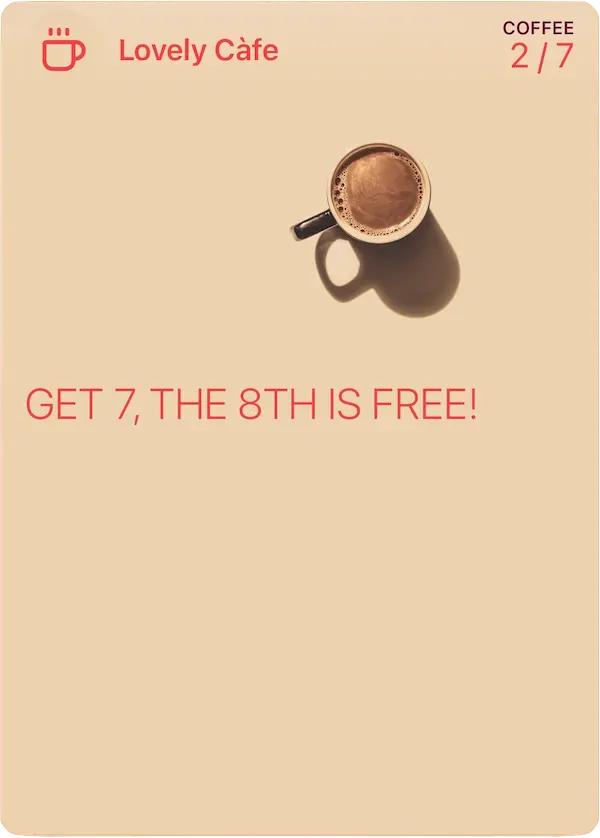


The client you see every month and can’t reach.
Here’s the thing nobody says out loud about barbershops: you can be someone’s barber for two years and have no idea how to contact them.
Picture a busy two-chair shop — call it Sal’s. Walk-ins all day, a card machine, a good reputation. A regular comes in every four weeks, pays, leaves. Sal knows his name, knows how he likes his fade, knows his kid’s name. What Sal doesn’t have is his phone number, his email, or any way to reach him if he stops showing up. So when that regular gets busy, or a shop opens nearer his office, or four weeks quietly turns into ten — Sal has no way to pull him back. He just notices, eventually, that he hasn’t seen him in a while.
That’s the real barbershop retention problem, and it’s not the one most loyalty pitches address. The cut cycle is already there — a fade grows out in three or four weeks whether you do anything or not. The thing you’re missing isn’t a reason for him to need a haircut. It’s a way to be the shop he books when he does.
A digital loyalty card solves the contact problem first and the loyalty problem second. The moment he scans the QR code at the desk and the card lands in his wallet, you have something you’ve probably never had in a walk-in business: a direct channel to every regular, sitting on the device he checks more than any other.
Three steps, and your client downloads nothing.
You build the card
Logo, colours, the reward in one line. About five minutes.
He adds it with one tap
Scans the QR code at the desk or taps a link you text him — the card lands in Apple Wallet or Google Wallet. No app, no account, no email form to fill in at the chair.
Any barber stamps from their phone
Open the card, add a stamp after the cut. He hits the reward, he gets a notification. He's overdue, you can send one.
The card carries your shop’s name and colours, and if you change the reward later it updates on his phone over the air — nothing for him to re-add.
How many stamps? Six is the safe default.
A barbershop runs closer to the café number than most appointment businesses — but not all the way.
About five months to the reward, on a monthly cut cycle. Range is six to eight.
A coffee shop uses ten stamps because the customer’s in twice a week; ten stamps is five weeks. A barber client comes every three to four weeks, so ten cuts is six to eight months to a free one — long enough that some clients lose the thread by stamp five.
Six to eight is the range, and six is the safe default. Six cuts on a monthly cycle is about five months to the reward: far enough to be worth running, close enough that he can see it coming by the third visit.
Start at six; you can always lengthen a card that’s working, and you can’t rescue one nobody believes in.
Make every barber stamp the same way.
This is the operational catch nobody warns you about, and it’s specific to shops with more than one chair: a loyalty card only works if every barber runs it the same way.
One barber stamps generously, another forgets unless the client asks, and a third “rounds up” for his favourites. The card stops meaning anything — and clients notice the inconsistency faster than you’d think.
One rule, said once to the whole shop: one cut, one stamp, every client, every chair. Boring, and it works.
Because any barber can pull up and stamp a client’s card from their own phone, the card belongs to the shop, not to whoever happened to cut that day — a client who usually sees Marco can come in on Marco’s day off, sit with someone else, and his card still works exactly the same.
Your client list shouldn’t live inside your booking app.
A quiet trap worth naming: if your only record of your clients lives inside a booking platform like Booksy or Squire, that client list isn’t truly yours.
Booking apps are useful, but they’re built to own the client relationship, not to hand it to you. Some charge a commission on every new client who finds you through their marketplace — Booksy’s marketplace boost takes a cut of that first visit. And if you ever leave the platform, the client list and the ability to message those people tend to stay behind.
A loyalty card you control is the counterweight: the contact channel and the relationship sit with your shop, on the client’s own phone, independent of whatever booking tool you use this year or switch to next.
You can run it alongside Booksy, Squire, Fresha, or a paper appointment book — it doesn’t care, and neither does your client.
The reward, and the two messages that earn their keep.
A free cut, beard trim, or hot-towel finish on the sixth visit beats “10% off.” A standing discount trains clients to wait for it and shaves margin on every visit; a free service feels like a reward and often fills a chair you’d have had empty anyway. Make it specific — “free cut on your sixth visit,” not “earn rewards” — so your barbers can explain it in one line at the chair.
Then use the channel you just built, sparingly, for the two messages that move bookings.
The grow-out nudge
The gift-card season
Looking shaggy? You’re two stamps from a free cut.
The card doesn’t replace your booking system. It does the thing booking software can’t — reach him at the moment he’s deciding, on a list that belongs to you. Your card data — who’s enrolled, who’s overdue, who’s close to a free cut — is yours, hosted in the EU under GDPR.
Questions from the chair.
Straight answers, no marketing fluff.